2026 Guide to Hearing Tests: What to Expect
Zarina Naizam, AuD, CCC-A · Published
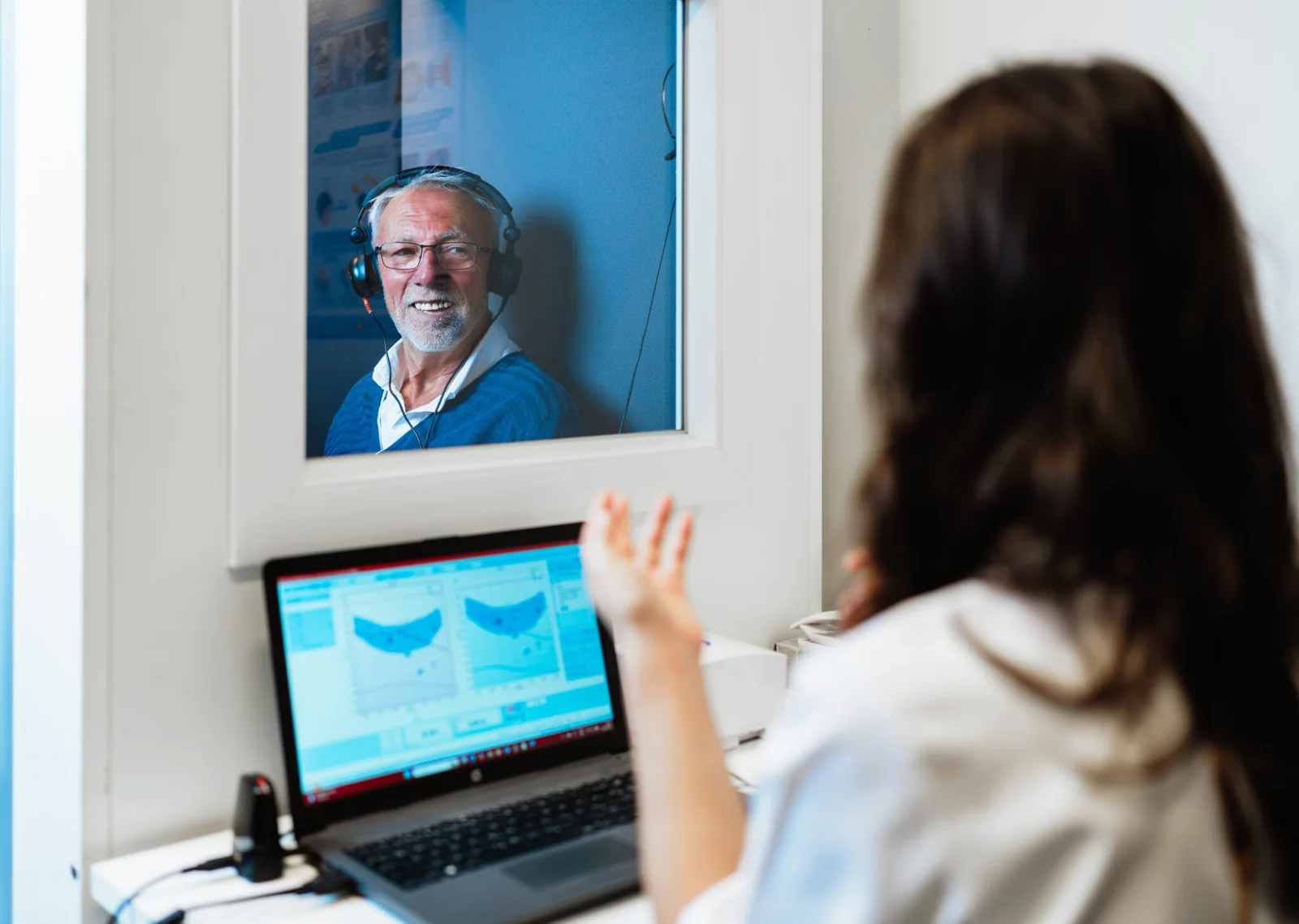
Hearing healthcare has evolved rapidly in recent years. In 2026, hearing tests are faster, more precise, and more personalized than ever before. Yet many people still delay screenings because they’re unsure what happens during an evaluation—or they believe hearing tests are only for older adults.
The truth? Regular hearing screenings are important at every stage of life. Early detection protects your communication, cognitive health, and overall quality of life.
Here’s your complete guide to modern hearing tests in 2026—what to expect, what’s new, and how often you should schedule a screening.
Why Regular Hearing Screening Matters
Hearing loss often develops gradually. Many people don’t notice the change until it begins affecting conversations, relationships, or work performance.
Untreated hearing loss has been linked to:
-
Increased listening fatigue
-
Social withdrawal
-
Reduced workplace productivity
-
Higher risk of cognitive decline
-
Increased fall risk in older adults
The good news? When hearing changes are identified early, treatment options are highly effective—and easier to adapt to.
Routine screening is proactive healthcare, just like checking your vision or blood pressure.
What to Expect During a Modern Hearing Test in 2026
Today’s hearing evaluations are comfortable, non-invasive, and typically take about 45–60 minutes.
Here’s what usually happens:
1. Conversation & Hearing Health History
Your provider will begin by asking about:
-
Difficulty hearing in noise
-
Ringing in the ears (tinnitus)
-
Ear fullness or pain
-
Family history of hearing loss
-
Noise exposure (work, concerts, hobbies)
This discussion helps tailor your testing to your lifestyle and concerns.
2. Otoscopy (Ear Examination)
A small lighted instrument is used to check for:
-
Earwax blockage
-
Signs of infection
-
Eardrum abnormalities
Sometimes, removing impacted earwax immediately improves hearing.
3. Pure-Tone Audiometry
This is the classic “raise your hand when you hear the beep” test.
You’ll wear headphones and listen for tones at different:
-
Pitches (low to high frequencies)
-
Volumes (soft to loud sounds)
Results are charted on an audiogram, which shows your hearing sensitivity across frequencies important for speech.
4. Speech Testing
Speech clarity matters just as much as volume. In 2026, speech testing is more advanced than ever.
You may be asked to:
-
Repeat words at different loudness levels
-
Identify speech in background noise
-
Complete sentence recognition tasks
Modern speech-in-noise testing is especially helpful for people who say, “I can hear, but I can’t understand.”
5. Middle Ear Testing (Tympanometry)
This test measures how well your eardrum moves and can identify:
-
Fluid in the ear
-
Eustachian tube dysfunction
-
Middle ear pressure issues
It’s quick and does not require active participation.
What’s New in Hearing Tests for 2026?
Hearing diagnostics continue to improve with technology and research advancements.
Here are some newer developments you may encounter:
✅ Real-World Speech Simulation
Some clinics now use advanced background noise simulations that replicate:
-
Restaurants
-
Meetings
-
Family gatherings
This provides a more realistic understanding of your communication challenges.
✅ Extended High-Frequency Testing
Traditional hearing tests measure up to 8,000 Hz. Many providers now test higher frequencies to detect early noise-induced hearing damage , especially in younger adults and musicians.
✅ Cognitive Screening Integration
Because hearing and brain health are closely connected, some evaluations now include brief cognitive screening tools for adults over 60. Early hearing treatment may help reduce cognitive strain.
✅ AI-Assisted Audiogram Analysis
Modern diagnostic software uses artificial intelligence to:
-
Detect subtle patterns
-
Predict speech understanding challenges
-
Recommend personalized treatment pathways
How Often Should You Get a Hearing Test?
Screening frequency depends on age and risk factors.
Children
-
Newborn screening at birth (standard in hospitals)
-
Before starting school
-
Anytime speech or learning delays are suspected
Adults (18–40)
-
Baseline hearing test at least once
-
Every 3–5 years if no risk factors
-
Sooner if exposed to loud noise regularly
Adults (40–60)
-
Every 2–3 years
-
Annually if experiencing tinnitus, noise exposure, or noticeable difficulty
Adults 60+
- Annual hearing evaluations recommended
Age-related hearing changes often begin subtly in the 50s and 60s. Annual monitoring allows early intervention.
Signs You Should Schedule a Hearing Test Sooner
Don’t wait for your next routine screening if you notice:
-
Frequently asking people to repeat themselves
-
Difficulty hearing in noisy environments
-
Turning the TV up louder than others prefer
-
Ringing or buzzing in your ears
-
Feeling exhausted after conversations
These are early warning signs—not something to “just live with.”
If You Do Have Hearing Loss, What Happens Next?
If your test reveals hearing changes, your provider will discuss options such as:
-
Advanced digital hearing aids
-
Over-the-counter hearing solutions (for mild cases)
-
Assistive listening devices
-
Communication strategies
-
Hearing protection recommendations
Today’s hearing aids in 2026 are smaller, rechargeable, Bluetooth-enabled, and often nearly invisible.
Early treatment leads to easier adjustment and better long-term outcomes.
The Bottom Line: Hearing Tests Are Preventive Healthcare
A hearing test isn’t just about volume—it’s about protecting your:
-
Relationships
-
Mental sharpness
-
Independence
-
Confidence
In 2026, hearing evaluations are quick, comfortable, and more informative than ever before.
If it’s been a few years since your last screening—or you’ve never had one—this is your sign to schedule a baseline test.
Because hearing well isn’t just about sound. It’s about staying connected to the moments that matter most.
Originally published on the date shown above. For current device options, fees or insurance coverage, please contact the clinic. Clinical review by the practice is pending; see our editorial policy.