The Link Between Tinnitus and Hearing Loss: What You Need to Know
Zarina Naizam, Au.D., CCC-A · Published
Tinnitus, commonly known as ringing in the ears, is a condition in which you perceive sound without an external source. You may hear ringing, buzzing, hissing, or humming, and the sound can vary in pitch, volume, and duration.
Tinnitus affects around 15-20 percent of the population and is often linked to hearing loss. In this article, we explain the connection between tinnitus and hearing loss and discuss available treatment options.
The Causes of Tinnitus
Tinnitus can be caused by a variety of factors, including:
-
Exposure to loud noises
-
Age-related hearing loss
-
Ear infections or blockages
-
Meniere’s disease
-
Otosclerosis (abnormal bone growth in the middle ear)
-
Certain medications
-
Head or neck injuries
The exact mechanism behind tinnitus is not entirely understood, but it is believed that damage to the auditory system, such as that caused by hearing loss, can change the way the brain processes sound.
The Link Between Tinnitus and Hearing Loss
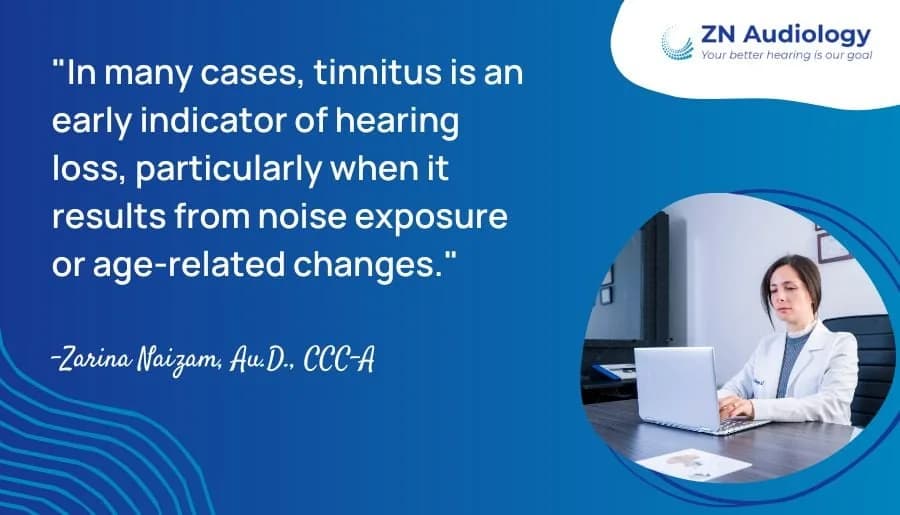
Hearing loss and tinnitus often coexist, as they both involve damage to the auditory system. In many cases, tinnitus is an early indicator of hearing loss, particularly when it results from noise exposure or age-related changes.
The hair cells in the inner ear are responsible for transmitting sound signals to the brain. When they are damaged, they can send false signals, so you perceive sound even when none is present.
Not everyone with hearing loss will experience tinnitus, and not everyone with tinnitus has hearing loss. Still, tinnitus can be a warning sign of potential hearing issues, and it’s crucial to seek a professional assessment if you’re experiencing these symptoms.
Let us help you get your quality of life back
Treatment Options for Tinnitus and Hearing Loss
While there is no cure for tinnitus, there are several treatment options available to help manage the condition and improve your quality of life. Some of these options include:
Hearing Aids
If your tinnitus is linked to hearing loss, hearing aids can be an effective way to manage both conditions. Hearing aids amplify external sounds, and they can also help mask the tinnitus by providing background noise or white noise, making it less noticeable.
Sound Therapy
Sound therapy involves using external sounds, such as white noise or nature sounds, to help distract from the tinnitus. You can do this with specialized devices or smartphone apps, and it can be tailored to suit your specific needs and preferences.
Tinnitus Retraining Therapy (TRT)
TRT is a form of therapy that aims to retrain the brain’s response to tinnitus, reducing its impact on daily life. TRT combines sound therapy with counseling to help you better understand and manage your tinnitus.
Cognitive-Behavioral Therapy (CBT)
CBT is a form of therapy that addresses the emotional and psychological aspects of tinnitus. It can help you identify and change negative thought patterns associated with the condition, ultimately reducing the distress it causes.
Seek Professional Help for Tinnitus and Hearing Loss
If you’re experiencing tinnitus, it’s crucial to consult a professional audiologist who can assess your hearing and recommend the most suitable treatment options for your specific needs.
At ZN Audiology, we are committed to helping our patients manage their tinnitus and improve their quality of life. Contact us today to schedule an assessment and discuss the best treatment options for you.
Originally published on the date shown above. For current device options, fees or insurance coverage, please contact the clinic. To learn how we prepare our articles, see our editorial policy.