
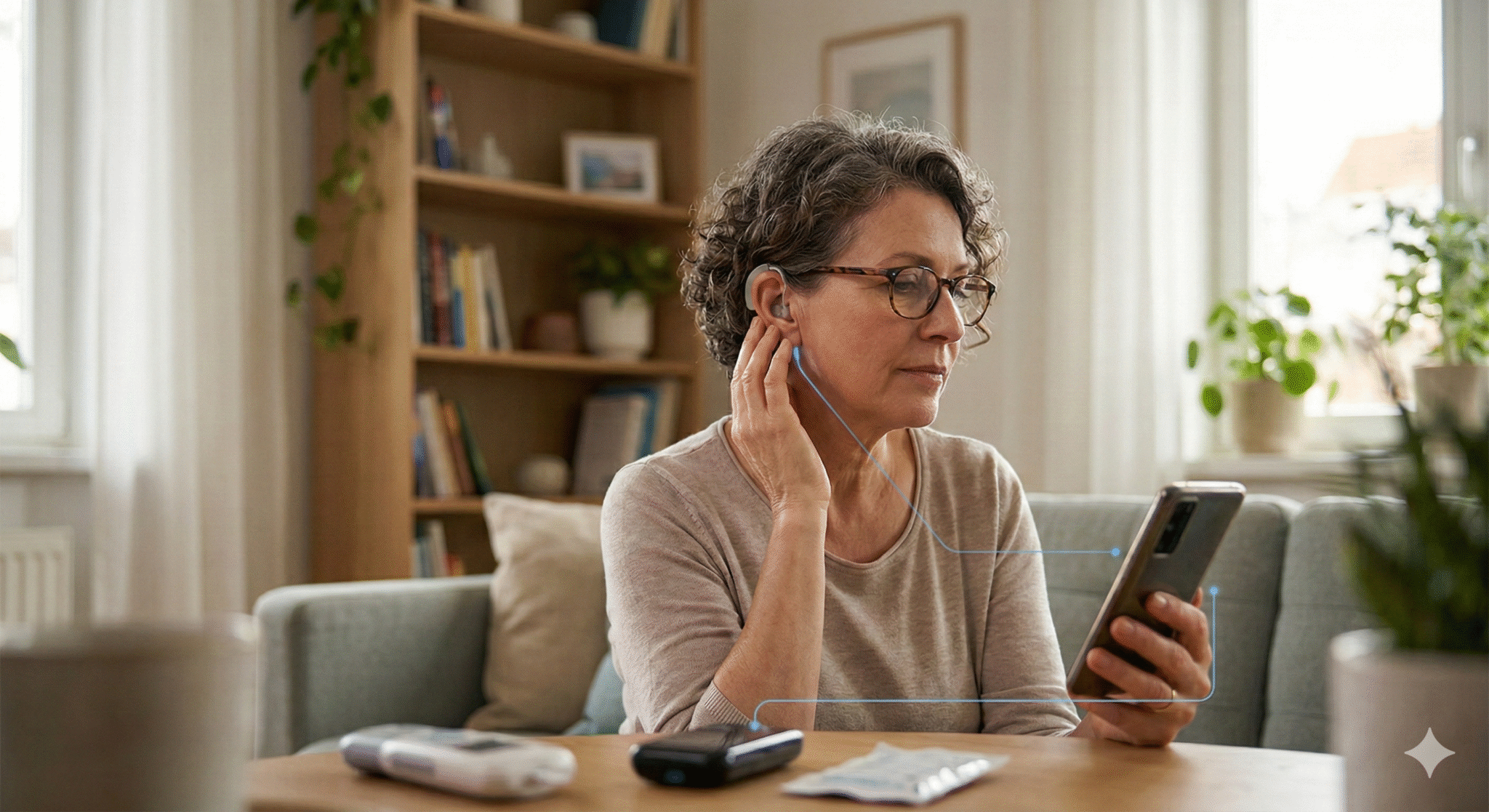
Did you know diabetes doesn’t just affect your blood sugar levels—it can also affect how you hear the world?
Most people know that living with diabetes means paying attention to blood sugar, but that is not the only side of it, as this condition has many other overlooked effects on the body. Over time, high blood sugar can damage the tiny blood vessels and nerves that keep our organs working properly. Most people know this can lead to vision problems or kidney issues, but only a few realize the ears are just as at risk.
The inner ear depends on delicate structures, called cochlear hair cells, to transmit sound to the brain. When diabetes damages these pathways, hearing can decline. Research shows that adults with diabetes are about twice as likely to experience hearing loss compared to those without the condition. This highlights the importance of protecting hearing health as part of diabetes management.
Why Regular Hearing Checkups Are Important
Hearing loss often develops gradually: At first, it may go unnoticed; you might think people are mumbling or that the TV isn’t clear. Over time, following conversations can become harder, leading to misunderstandings and feelings of isolation or frustration.
Caring for your hearing is part of caring for your overall health: Just as you monitor your blood pressure, vision, or dental health, your ears also need regular attention. Hearing plays a vital role in balance, memory, and maintaining social connections.
Early detection is the key: The good news is that noticing changes early can make a huge difference: if changes are spotted early, an audiologist can recommend helpful solutions like hearing aids, lifestyle modifications, or medical follow-up to help you stay safe, confident, and connected.
Conclusion
Since hearing loss often develops slowly, it’s easy to ignore until it begins to interfere with daily life. Regular checkups are a vital way to stay ahead of these changes and protect your overall well-being.
If you or someone you care about lives with diabetes, consider consulting an audiologist. Early support and guidance can significantly improve your connection, confidence, and engagement with the world.