
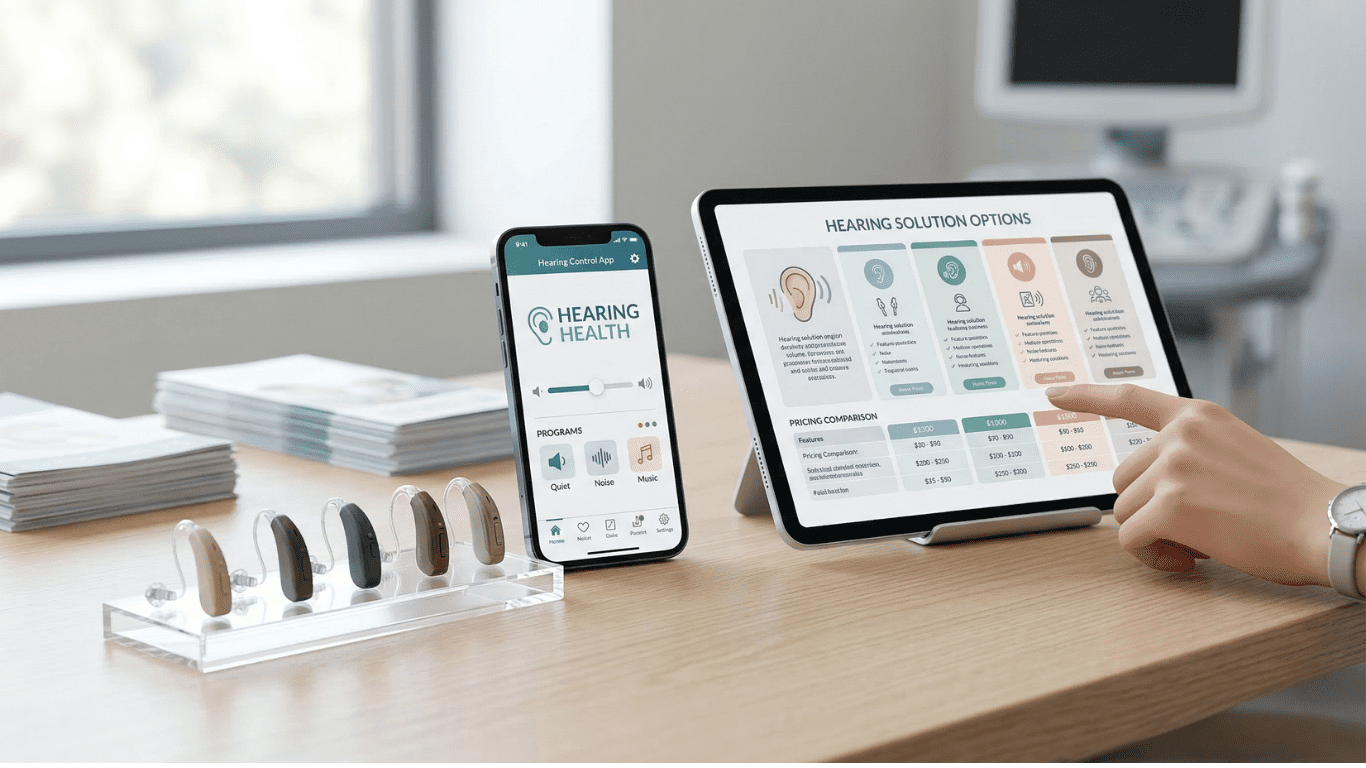
If you’re researching hearing aids, one of the first questions that likely comes to mind is “How much do hearing aids cost?” In 2026, the answer isn’t just about price—it’s about technology level, long-term value, and the flexible ways people can pay for better hearing.
Modern hearing aids are sophisticated medical devices that do far more than simply amplify sound. Today’s technology can automatically adapt to your environment, connect to smartphones, and even use artificial intelligence to improve speech clarity. Understanding the different technology levels and financing options can help you choose the best hearing solution for your lifestyle and budget.
Hearing Aid Technology Levels in 2026
One of the biggest factors influencing hearing aid pricing is technology level. Just like smartphones or computers, hearing aids come in different tiers designed to meet different listening needs.
Basic Technology
Basic hearing aids are designed to improve hearing in quieter environments and everyday conversations.
These devices typically include:
- Clear sound amplification
- Basic noise reduction
- Simple directional microphones
- Reliable performance for one-on-one conversations
Basic technology is often a good choice for individuals who spend most of their time in calmer listening environments, such as home settings or small gatherings.
Mid-Level Technology
Mid-level hearing aids offer enhanced sound processing and more automatic adjustments, making them better suited for people who regularly experience more dynamic listening environments.
Features may include:
- Improved background noise reduction
- Automatic sound adjustments between environments
- Bluetooth connectivity for phones and streaming
- Better speech clarity in groups
For many people, mid-level technology provides an excellent balance between performance and value.
Premium Technology
Premium hearing aids represent the most advanced hearing technology available in 2026.
These devices often include:
- Artificial intelligence sound processing
- Advanced speech recognition
- Automatic adaptation to complex sound environments
- Enhanced performance in restaurants, meetings, and crowds
- Seamless smartphone integration
- Rechargeable battery systems
Premium devices are ideal for people who lead active, social lifestyles and want the best possible listening experience in challenging environments.
The Value of Professional Hearing Care
When evaluating hearing aids, it’s important to think beyond the device itself. A major part of the value comes from professional expertise and personalized care.
When hearing aids are provided through a hearing care professional, patients benefit from:
- Comprehensive hearing evaluations
- Personalized device selection
- Precise programming tailored to your hearing profile
- Follow-up adjustments and fine-tuning
- Ongoing care, cleanings, and maintenance
Because hearing loss is unique to each individual, professional fitting ensures that hearing aids are properly calibrated to deliver the best possible results.
According to the National Institute on Deafness and Other Communication Disorders (NIDCD), hearing aids that are properly fitted and adjusted by a hearing professional significantly improve communication and overall satisfaction for people with hearing loss.
Flexible Payment and Financing Options
Hearing care providers understand that hearing aids are an investment in your health and quality of life. Fortunately, many payment options are available to make hearing care more accessible.
Common options include:
Payment Plans
Many hearing clinics offer flexible monthly financing plans, allowing patients to spread payments over time instead of paying everything upfront.
Health Savings Accounts (HSA/FSA)
Hearing aids and hearing evaluations are typically eligible medical expenses, meaning they can often be paid for using HSA or FSA funds.
Insurance Benefits
Some private insurance plans and Medicare Advantage plans provide hearing aid allowances or discounted pricing through participating providers.
Manufacturer Promotions
Hearing aid manufacturers occasionally offer rebates, seasonal promotions, or bundled service packages that help reduce out-of-pocket costs.
A hearing professional can review these options and help you find a solution that fits your needs and financial situation.
Investing in Better Hearing
Treating hearing loss is about more than improving volume—it’s about improving communication, relationships, and overall quality of life.
Research has shown that untreated hearing loss is associated with:
- Increased social isolation
- Higher risk of cognitive decline
- Greater likelihood of depression
- Reduced overall quality of life
Addressing hearing loss early allows people to remain engaged in conversations, maintain independence, and stay active socially.
Take the First Step Toward Better Hearing
The best way to determine which hearing aid technology is right for you is to schedule a comprehensive hearing evaluation with a hearing care professional. A personalized consultation allows you to explore technology options, receive expert guidance, and learn about payment solutions that make better hearing achievable.
Better hearing starts with the right technology—and the right professional guidance.
Sources
National Institute on Deafness and Other Communication Disorders (NIDCD). Hearing Aids.
World Health Organization (WHO). World Report on Hearing.
Johns Hopkins Medicine. The Hidden Risks of Hearing Loss.